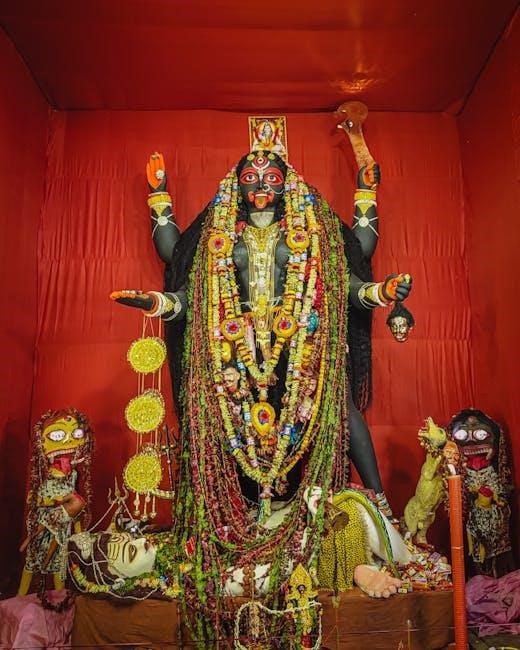
Kalabhairava Ashtakam, available as a PDF, is a devotional hymn dedicated to Lord Kalabhairava. It’s a revered text within Hindu traditions, detailing the deity’s power.
What is Kalabhairava Ashtakam?
Kalabhairava Ashtakam is an eight-verse (Ashtakam) stotra, a hymn, dedicated to Lord Kalabhairava, a fierce manifestation of Lord Shiva. Widely accessible as a PDF document, it’s a powerful prayer recited by devotees seeking blessings and protection. The stotra beautifully describes Kalabhairava’s attributes and his role as the protector of Kashi (Varanasi).
This sacred text, often found online in various formats, including downloadable PDFs, is considered highly auspicious. It’s a compilation of verses praising Kalabhairava’s glory, emphasizing his dominion and divine power. The hymn serves as a potent tool for spiritual practice and is deeply revered within Hindu philosophy and traditions. It’s a concise yet comprehensive prayer encapsulating the essence of Kalabhairava’s divine presence.
Historical Context and Authorship (Adi Shankaracharya)
The Kalabhairava Ashtakam is traditionally attributed to Adi Shankaracharya, the renowned 8th-century Indian philosopher and theologian. While definitive historical proof remains elusive, the stotra’s style and philosophical depth align with Shankaracharya’s teachings. Numerous PDF versions circulating online credit him as the author, solidifying this belief within the Hindu community.
Shankaracharya’s composition likely arose from his deep connection with Kashi (Varanasi), a city central to Kalabhairava worship. The stotra’s availability as a PDF has greatly facilitated its widespread dissemination and recitation. His authorship underscores the stotra’s significance within the Advaita Vedanta tradition, emphasizing the non-dual nature of reality and the power of devotion. It’s a testament to his profound spiritual insight.
Significance of Kashi (Varanasi) in Relation to Kalabhairava
Kashi (Varanasi) holds paramount importance in the worship of Kalabhairava, frequently described as the city’s protector and lord – Kashinath. The Kalabhairava Ashtakam explicitly references this connection, elevating Kashi’s spiritual status. Many PDF versions of the stotra emphasize this relationship, highlighting Kashi as the primary seat of Kalabhairava’s power.
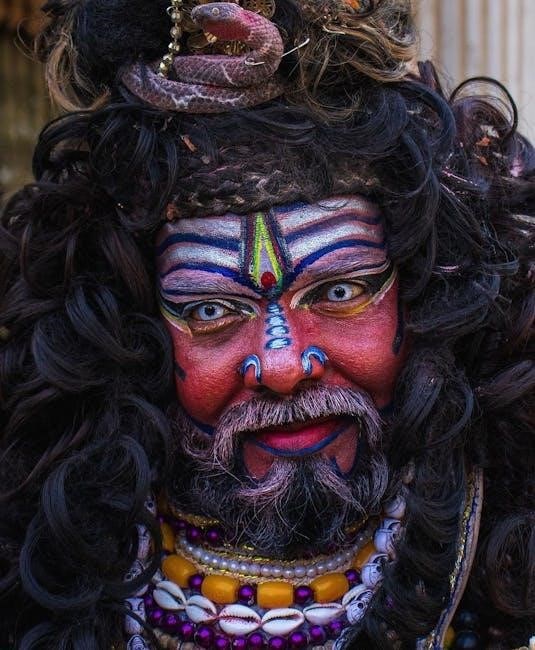
Devotees believe Kalabhairava constantly patrols the city, ensuring the well-being of its inhabitants. Reciting the Kalabhairava Ashtakam, readily available as a PDF, in Kashi is considered particularly potent. The city’s sacred geography and the presence of numerous Kalabhairava temples amplify the stotra’s efficacy. This deep-rooted association makes Kashi the epicenter of Kalabhairava devotion within Hindu tradition.
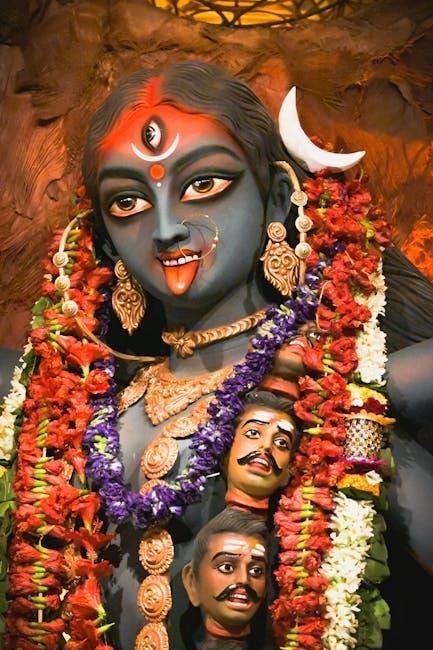
The Structure of Kalabhairava Ashtakam
Kalabhairava Ashtakam comprises eight verses, often found in PDF format, structured as a devotional hymn. Its lyrical form and meter enhance spiritual resonance.
The Eight Verses (Ashtakam) – An Overview
Kalabhairava Ashtakam, readily accessible as a PDF, unfolds through eight distinct verses, each a powerful invocation of Lord Kalabhairava. These verses, known collectively as the Ashtakam, systematically detail the deity’s glorious attributes and divine powers. The initial verses often focus on praising Kalabhairava as the protector of Kashi, the sacred city of Varanasi, and the one revered by even the gods.

Subsequent verses delve into his fierce iconography – the naked form, the garland of skulls, and the weapons he wields. The Ashtakam doesn’t merely describe; it aims to evoke a profound sense of awe and devotion. Each verse builds upon the previous, culminating in a complete and comprehensive portrait of this formidable aspect of Shiva. Downloading the PDF allows for focused study and recitation of these impactful verses.
Meter and Style of the Stotra
The Kalabhairava Ashtakam, often found as a convenient PDF download, is composed in a specific poetic meter, enhancing its rhythmic quality and making it conducive to chanting. The stotra primarily employs the Anushtubh meter, a classical Sanskrit meter known for its balance and flow. This choice contributes to the ease of memorization and recitation.
The style is characterized by a blend of reverence and directness. Adi Shankaracharya, traditionally credited with authorship, utilizes evocative imagery and powerful adjectives to portray Kalabhairava’s attributes. The language, while classical Sanskrit, remains accessible, even within a PDF translation. The verses are concise yet packed with meaning, reflecting a devotional intensity. The consistent metrical structure and stylistic choices elevate the stotra beyond a simple prayer, transforming it into a potent spiritual practice.
Availability of the Text – PDF and Other Formats
The Kalabhairava Ashtakam is widely accessible in various formats, with the PDF version being particularly popular for its portability and ease of use. Numerous websites offer free PDF downloads, facilitating convenient access for devotees. Beyond PDFs, the stotra is available as a Word document (.doc) and plain text file (.txt) for those preferring different formats.
Online resources provide lyrics alongside English translations, aiding comprehension for non-Sanskrit speakers. Stotra Nidhi and other digital libraries host the text. Printed editions are also available through religious bookstores and publishers specializing in Hindu literature. Several apps dedicated to stotras include the Kalabhairava Ashtakam, offering audio recitations alongside the text, enhancing the devotional experience.
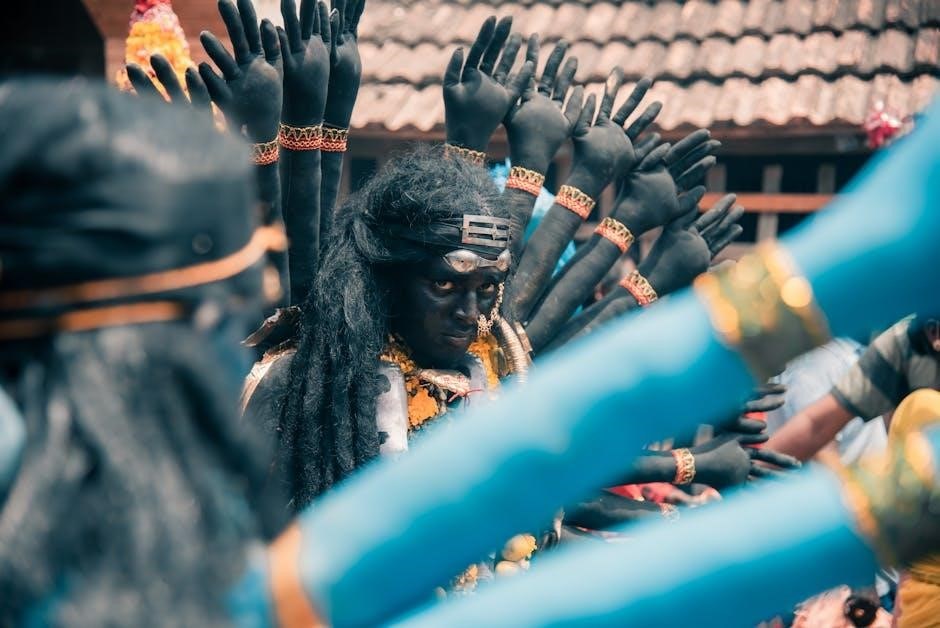
Key Attributes of Kalabhairava Described in the Ashtakam
Kalabhairava, as detailed in the Ashtakam and readily found in PDF formats, is depicted naked, adorned with skulls and snakes, wielding destructive weapons.
Appearance and Iconography: Naked Form, Skulls, and Snakes
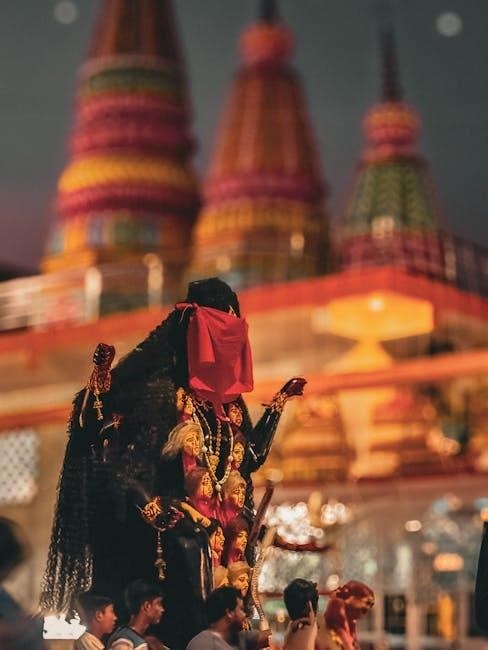
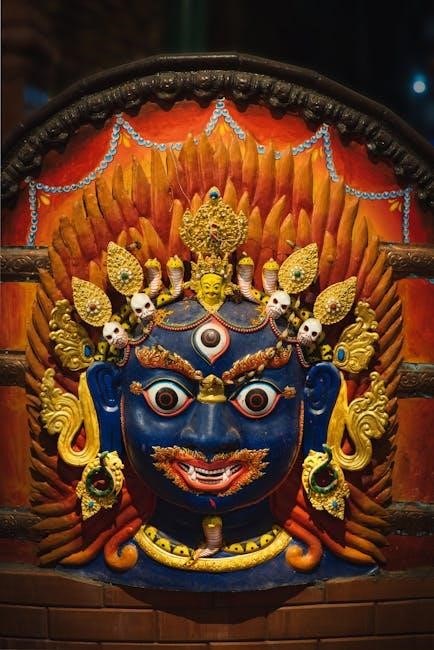
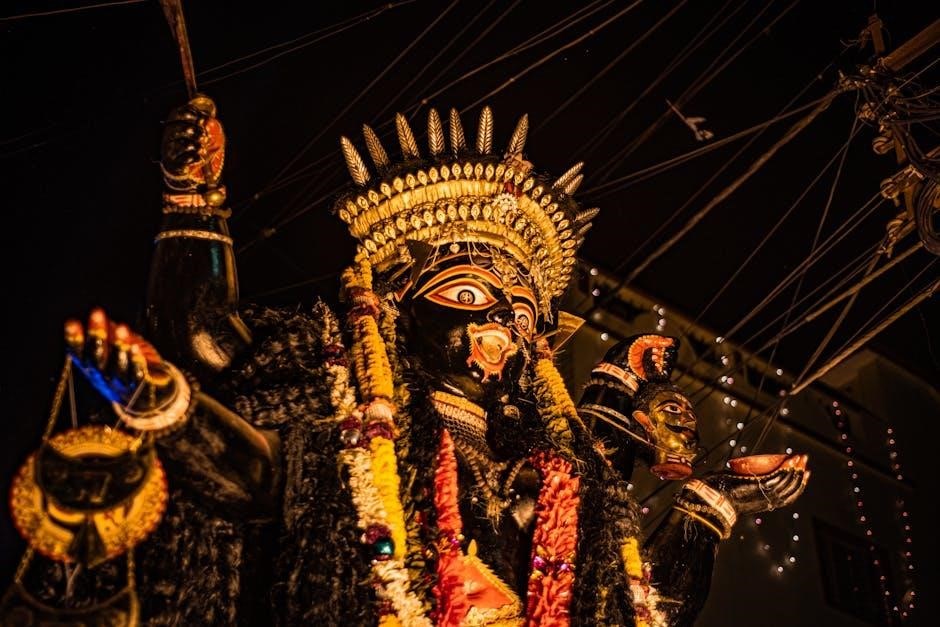
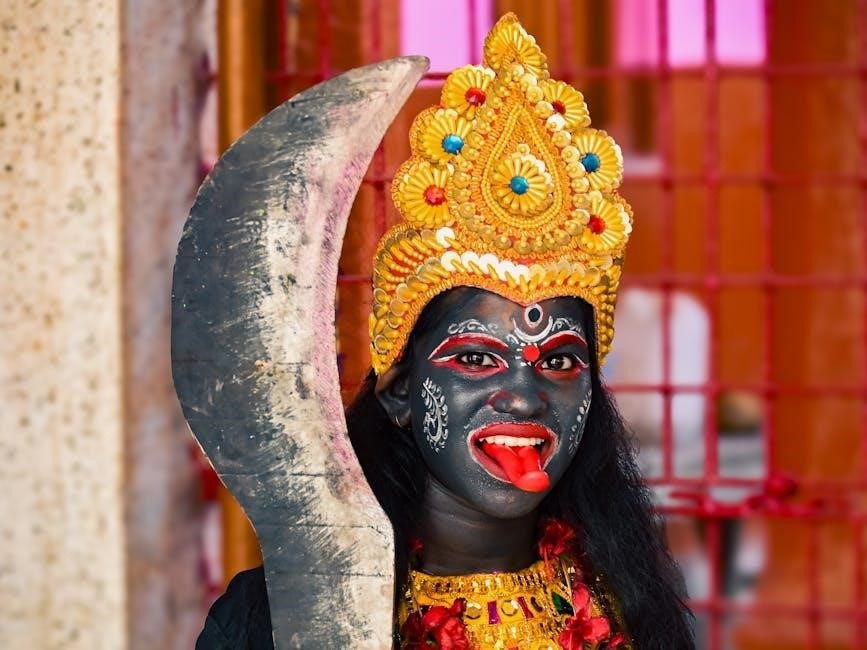
Kalabhairava’s iconography, extensively described within the Kalabhairava Ashtakam – often accessible as a PDF – is strikingly unique and powerfully symbolic. He is traditionally depicted in a naked form, representing complete detachment from worldly illusions and a transcendence of societal norms. This starkness emphasizes his raw, untamed energy.
A garland of skulls perpetually adorns his neck, signifying mortality and the cyclical nature of life and death. These skulls aren’t gruesome, but rather emblems of liberation from fear. Serpents are intricately entwined around his body, symbolizing kundalini energy and the power to overcome obstacles. The Ashtakam’s verses, available in various PDF versions, consistently highlight these potent visual elements, reinforcing Kalabhairava’s role as a fierce protector and a destroyer of negativity.
Weapons and Their Symbolism
The Kalabhairava Ashtakam, frequently found as a downloadable PDF, vividly portrays Lord Kalabhairava wielding formidable weapons, each imbued with profound symbolism. He’s often depicted with a sword, representing the power to sever attachments and ignorance. A trident signifies control over the three realms – physical, mental, and spiritual – and the destruction of negativity.
The khadga (sword) and pasha (noose) symbolize his authority over life and death, and his ability to bind or release souls. These weapons, detailed in the Ashtakam’s verses available in PDF format, aren’t instruments of violence, but tools for dismantling illusions and guiding devotees towards liberation. They represent the fierce aspect of Shiva, necessary for transformative change and spiritual progress, as understood within Hindu philosophy.
Role as the Lord of Kasi (Kashinath)
The Kalabhairava Ashtakam, readily accessible as a PDF, profoundly emphasizes Lord Kalabhairava’s unique position as the protector and ruler of Kashi (Varanasi), revered as Kashinath. This sacred city, central to Hindu belief, is considered his domain, and the Ashtakam repeatedly praises his sovereignty over it.
The text, often downloaded in PDF format for devotional practice, highlights that even the gods, including Indra, seek his blessings. He safeguards Kashi and its devotees, granting liberation to those who die within its boundaries. The Ashtakam portrays him as the ultimate authority in Kashi, a fierce yet benevolent guardian, ensuring spiritual well-being. His lotus feet are served and revered, solidifying his role as the city’s divine protector.
Meaning and Interpretation of the Verses
Kalabhairava Ashtakam’s PDF versions offer lyrical breakdowns, revealing spiritual symbolism and the benefits of recitation, detailing Kalabhairava’s attributes and divine power.
Verse-by-Verse Breakdown of the Lyrics
Analyzing the Kalabhairava Ashtakam, readily accessible as a PDF, reveals profound meanings within each verse. The first verse praises Kalabhairava’s lotus feet, revered even by Indra. Subsequent verses detail his fierce yet benevolent nature, adorned with skulls and snakes, wielding destructive weapons.
The PDF often includes transliteration and translations, aiding comprehension. Each verse elaborates on his role as the Lord of Kashi (Kashinath), granting boons and liberation. The stotra highlights his power over time (Kala) and destruction, emphasizing his unique position within the Shiva tradition.
Understanding the symbolism – the skulls representing detachment, the snakes signifying Kundalini energy – enriches the chanting experience. The verses collectively paint a picture of a powerful deity capable of both destruction and protection.
Spiritual Symbolism of Chanting the Ashtakam
Chanting the Kalabhairava Ashtakam, easily found as a PDF download, is believed to invoke powerful spiritual energies. The stotra’s verses, when recited with devotion, are said to dissolve fears and negative energies. It symbolizes surrendering to the fierce aspect of Shiva, facilitating inner transformation.
The repetition of the verses, available in PDF format with transliterations, aids in focused meditation. It’s considered a potent practice for overcoming obstacles and achieving liberation (moksha). The stotra’s imagery – skulls, snakes, weapons – represents detachment from worldly attachments and the power to confront one’s inner demons.
Regular recitation, guided by the PDF text, fosters courage, clarity, and a deeper connection with the divine.
Benefits of Reciting Kalabhairava Ashtakam
Reciting the Kalabhairava Ashtakam, readily accessible as a PDF, offers numerous spiritual benefits. Devotees believe it protects against negative energies, removes obstacles, and grants wishes. The stotra’s power, detailed in available PDF versions, is said to alleviate fears and anxieties, fostering inner peace.
Consistent chanting, guided by the PDF lyrics, strengthens one’s connection with Lord Shiva and promotes spiritual growth. It’s believed to bestow courage, wisdom, and clarity of mind. The stotra is particularly effective for those seeking to overcome challenges and achieve success in their endeavors.
Accessing the PDF facilitates regular practice, unlocking these profound benefits.
Practical Aspects of Recitation
Kalabhairava Ashtakam recitation, using a PDF for accurate verses, benefits from proper pronunciation. Consistent practice, guided by the PDF, enhances spiritual impact.
Proper Pronunciation of the Sanskrit Verses
Achieving correct pronunciation when reciting the Kalabhairava Ashtakam, often accessed via a PDF document, is paramount for maximizing its spiritual benefits. Sanskrit, the language of the stotra, possesses nuanced sounds not readily found in common speech. Utilizing a PDF with transliteration can aid in understanding the phonetic structure of each verse.
Online resources accompanying the PDF often provide audio recitations by experienced practitioners, offering a valuable guide for learners. Paying close attention to the correct articulation of vowels, consonants, and the subtle ‘svara’ (intonation) is crucial. Mispronunciation can alter the meaning and potency of the mantras. Consistent practice, alongside careful study of the PDF’s transliteration, will gradually refine pronunciation, fostering a deeper connection with the divine energy of Kalabhairava.
Recommended Time and Place for Recitation
For optimal results when reciting the Kalabhairava Ashtakam – readily available as a PDF for convenient access – specific times and locations are traditionally favored. Nighttime, particularly during the Ashtami tithi (eighth lunar day) or on Saturdays, is considered auspicious, aligning with Kalabhairava’s energetic peak. A quiet, clean space dedicated to spiritual practice is ideal; a temple, or a home altar facing north or east, are excellent choices.
Referring to the PDF, establishing a consistent routine enhances the practice. Some practitioners prefer reciting near a Shiva lingam or an image of Kalabhairava. Minimizing distractions and maintaining a reverent mindset are essential. The PDF may also contain guidance on preparatory rituals, further amplifying the recitation’s efficacy.
Rituals and Offerings During Recitation
Enhancing the recitation of the Kalabhairava Ashtakam – easily accessible as a PDF – often involves specific rituals and offerings. Traditionally, offering black sesame seeds, til, and black flowers is considered highly propitious to Lord Kalabhairava. Incense, particularly sandalwood, creates a sacred atmosphere. A small offering of masoor dal (red lentils) is also common.
Before beginning, consulting the PDF for suggested puja (worship) procedures is beneficial. Some practitioners perform a small homa (fire ritual) or offer a symbolic sacrifice of ego. Maintaining a focused intention and sincere devotion are paramount. The PDF might detail specific mantras to accompany the recitation, amplifying its spiritual impact and ensuring a deeper connection with the deity.
Kalabhairava in Hindu Philosophy
Kalabhairava, detailed in the Ashtakam PDF, represents Shiva’s fierce aspect, embodying time’s destructive power and transcendence within the broader Hindu philosophical framework.
Kalabhairava’s Position within the Shiva Tradition
Kalabhairava occupies a unique and potent position within the expansive Shiva tradition, often considered Shiva’s fierce and terrifying manifestation. The Kalabhairava Ashtakam, readily available as a PDF, elucidates this connection, portraying him as the ultimate protector of Kashi and a powerful force against negativity. He isn’t merely a destructive force, but one that dismantles illusions to pave the way for spiritual liberation.
Unlike gentler forms of Shiva, Kalabhairava embodies untamed energy. The Ashtakam highlights his role as a guardian, ensuring the continuity of cosmic order. He’s frequently depicted as naked, adorned with skulls, symbolizing detachment from worldly attachments. This imagery, detailed within the PDF text, isn’t meant to be gruesome, but rather a representation of ultimate freedom and transcendence. His devotees seek his blessings for overcoming obstacles and achieving profound spiritual insights.
Relationship to Time (Kala) and Destruction
The name Kalabhairava itself reveals a profound connection to Time (Kala) and the inevitable process of Destruction. Within the Shiva tradition, and as detailed in the Kalabhairava Ashtakam – often found as a downloadable PDF – Kala isn’t simply linear progression, but the cosmic force that dissolves and transforms. Kalabhairava embodies this power, dismantling the old to make way for the new.
This destructive aspect, however, isn’t chaotic. It’s a necessary component of creation and preservation. The Ashtakam’s verses, accessible in PDF format, emphasize Kalabhairava’s role in severing attachments and illusions, freeing the soul from the cycle of rebirth. He’s the ultimate dispassionate observer, witnessing the impermanence of all things. Seeking his blessings, as outlined in the text, aids in accepting change and embracing the natural flow of existence.
Kalabhairava as a Form of Fierce Deity (Ugra Devata)
Kalabhairava is prominently recognized as an Ugra Devata – a fierce form of deity – within the Hindu pantheon. The Kalabhairava Ashtakam, readily available as a PDF download, vividly portrays this aspect through descriptions of his iconography: naked, adorned with skulls, and wielding destructive weapons. This ferocity isn’t indicative of malice, but rather, a potent force for dismantling negativity and ignorance.
The PDF versions of the Ashtakam highlight that his intimidating appearance serves to instill fear in evil forces and devotees’ ego. He’s a guardian who confronts and destroys obstacles on the spiritual path. This fierce energy, detailed in the stotra’s verses, is essential for severing karmic bonds and achieving liberation. Understanding Kalabhairava as an Ugra Devata is key to appreciating the depth of his power and grace.
Resources and Further Study
Kalabhairava Ashtakam PDF downloads and online lyrics are widely accessible. Explore Stotra Nidhi and other sites for translations and scholarly articles on this powerful hymn.
Links to Download Kalabhairava Ashtakam PDF
Numerous online resources offer the Kalabhairava Ashtakam in PDF format for convenient access and study. HinduNidhi provides a downloadable PDF version of the Kalabhairav Ashtak, alongside related stotras like the Teekshna Danshtra Kalabhairava Ashtakam.
Additionally, searching for “Sri Kalabhairava Ashtakam PDF” yields results from various devotional websites and online libraries. These often include versions with transliteration, translations, and accompanying commentaries. Remember to verify the source’s authenticity when downloading any religious text.
Websites like archive.org may also host digitized copies of older publications containing the Ashtakam. Always ensure your device is protected with updated security software before downloading files from the internet.
Online Resources for Lyrics and Translations
Several websites provide the lyrics to the Kalabhairava Ashtakam alongside English translations, aiding in understanding and recitation. Stotra Nidhi offers the Sanskrit lyrics with transliteration, facilitating correct pronunciation.
The Art of Living details the spiritual symbolism within the verses, offering insights into the deity’s attributes as described by Adi Shankaracharya. Searching online reveals multiple platforms hosting the lyrics, often accompanied by audio recitations for proper intonation.
These resources are invaluable for devotees seeking a deeper connection with the stotra and its profound meaning. Remember to cross-reference translations for accuracy and clarity.
Books and Scholarly Articles on Kalabhairava
While dedicated scholarly works solely on the Kalabhairava Ashtakam are limited, broader texts on Shiva and Tantric traditions often include sections discussing Kalabhairava’s significance. Exploring books on Kashi (Varanasi) provides contextual understanding, as the city is central to the deity’s worship.
Researching publications focusing on Adi Shankaracharya’s works may reveal deeper analyses of the stotra’s philosophical underpinnings. Academic databases and online libraries can yield scholarly articles examining the iconography and symbolism associated with Kalabhairava.
Further study enhances appreciation of the PDF’s content and the deity’s place within Hindu cosmology.
Related Posts

heroes of olympus series pdf
Heroes of Olympus Series PDF⁚ A Comprehensive Guide This guide…

asthma control test 4-11 pdf
Childhood Asthma Control Test (C-ACT) for Ages 4-11 The Childhood…

the american promise 8th edition pdf free
The American Promise 8th Edition PDF Free: A Comprehensive Guide…