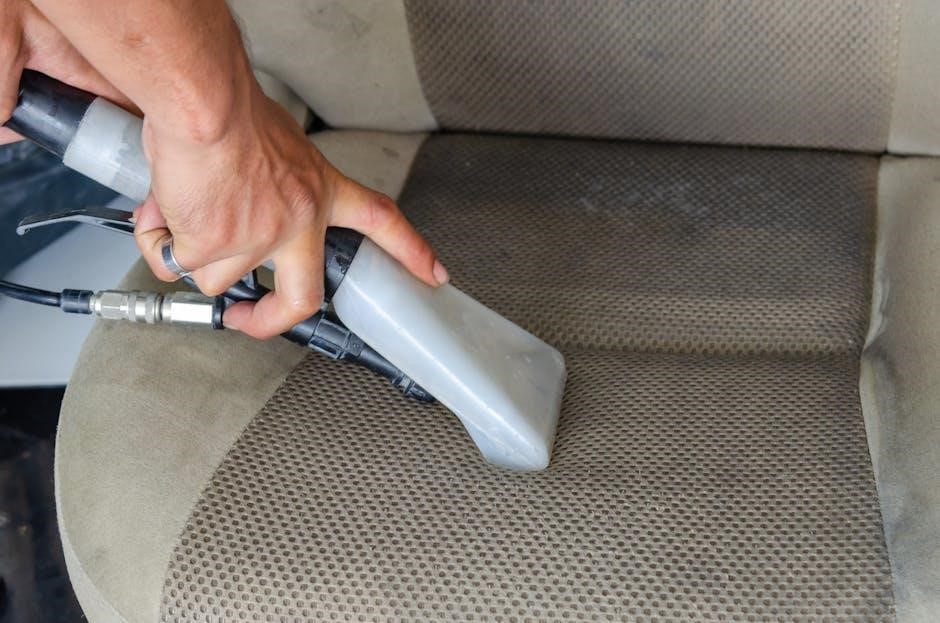
Manual push vacuums represent an eco-friendly, cost-effective cleaning solution, utilizing manual power for debris removal. These lightweight tools offer a sustainable alternative, ideal for quick cleanups.
What is a Manual Push Vacuum?
A manual push vacuum is a cleaning device propelled by human power, eliminating the need for electricity. Unlike conventional vacuums, it relies on a brush roll and sweeping action to gather dust, dirt, and debris. These vacuums are designed for both indoor and outdoor use, effectively handling materials like leaves, paper, and even metal shavings. They offer a simple, sustainable cleaning method, prioritizing ease of use and environmental responsibility.
Benefits of Using a Manual Push Vacuum
Manual push vacuums offer numerous advantages, starting with their eco-friendly nature and reduced energy consumption. They are lightweight and portable, making them ideal for small spaces and quick cleanups. Cost-effectiveness is another key benefit, as there are no electricity bills or expensive filters to replace. Furthermore, they operate quietly, minimizing noise pollution, and promote a healthier environment.
Key Features and Components
Essential components include the brush roll, dustbin, and handle; design impacts performance. Capacity varies, and ergonomic handles ensure comfortable operation for effective cleaning.
Brush Roll Design and Materials
The brush roll is central to a manual push vacuum’s effectiveness, sweeping debris into the dustbin. Designs vary, with some models featuring dual side brooms for enhanced edge cleaning. Materials commonly include durable polypropylene or nylon bristles, chosen for their ability to agitate and lift dirt from various surfaces. Height adjustability is a key feature, allowing adaptation to different floor types and ensuring optimal contact for thorough cleaning, even on uneven ground.
Dustbin Capacity and Type
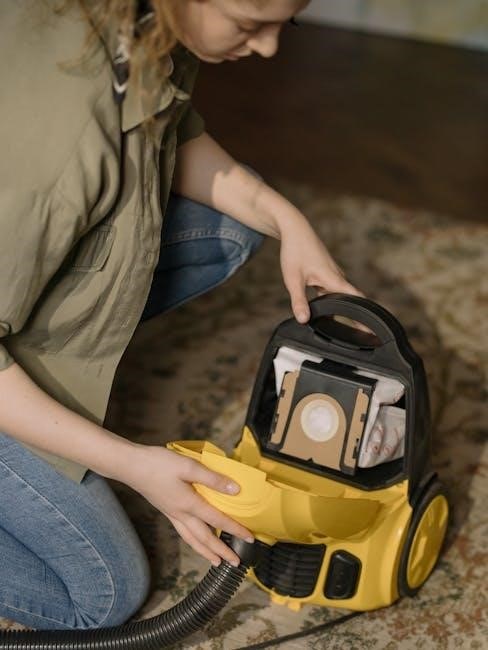
Manual push vacuums feature dustbins designed for efficient debris collection. Capacities range, with models like the NC 4 32 offering 10 US Gal, while the NC 9 36 boasts a larger 16 US Gal capacity. These dustbins effectively capture materials like metal shavings, nails, paper, leaves, and even beverage cans. The type is generally a simple, removable container for easy emptying and disposal of collected waste.
Handle and Ergonomics
Manual push vacuums prioritize user comfort with thoughtfully designed handles. These models are engineered to be “easy to push,” facilitating effortless operation across various surfaces, including stairs. The ergonomic design minimizes strain during use, allowing for extended cleaning sessions. Adjustable height sweeping further enhances usability, adapting to different ground conditions and user preferences for optimal comfort.
Types of Manual Push Vacuums
Manual push vacuums come in standard sweeper, vacuum-function, and combination models, offering versatility for indoor and outdoor cleaning tasks with varying capabilities.
Standard Manual Push Sweepers
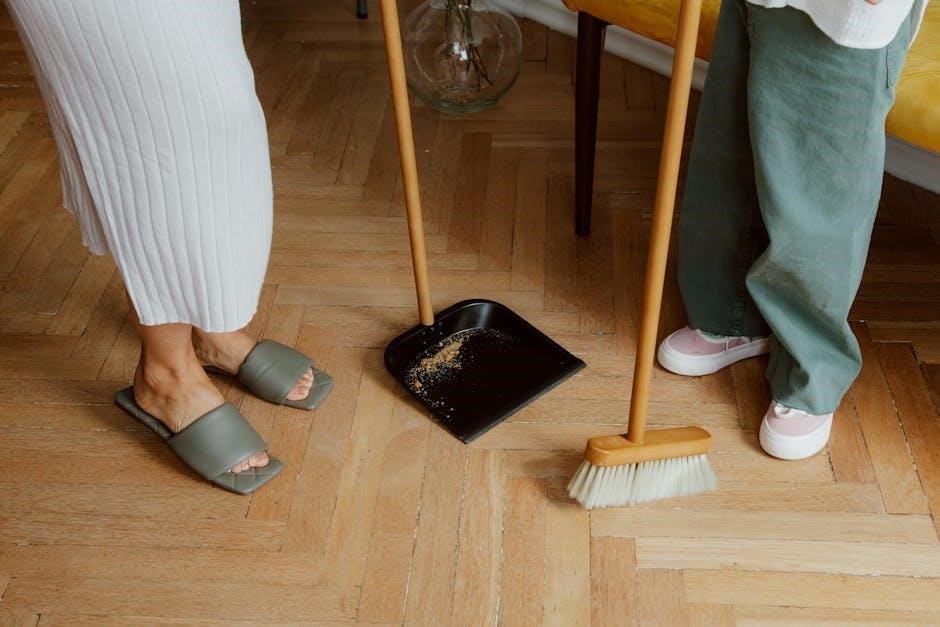
These traditional models, like the NC 4 32, rely purely on mechanical action with rotating brushes to gather debris. They excel at collecting larger particles – leaves, paper, and even beverage cans – on both indoor and outdoor surfaces. Their simple design makes them incredibly durable and easy to maintain, requiring no electricity for operation. They are also easily maneuverable on stairs and around corners, offering a practical cleaning solution for various environments.
Manual Push Vacuums with Vacuum Function
Representing a step up in technology, models like the NC 9 36 combine sweeping with a vacuum system, enhancing debris collection, including fine dust and metal shavings. These often feature a traction drive for easier pushing and larger dustbin capacities – up to 16 US gallons. Suitable for both indoor and outdoor use, they offer a more comprehensive cleaning solution while remaining eco-friendly and electricity-free.
Combination Sweeper-Vacuum Models
These innovative designs, exemplified by the NC 9 36, merge the benefits of both sweeping and vacuuming into a single, manual unit. Featuring dual side brooms and substantial dustbin capacity, they effectively tackle diverse debris – from leaves and paper to metal shavings. Their adaptability to stairs and various surfaces makes them versatile cleaning tools, offering a powerful, yet eco-conscious, alternative.

Performance and Cleaning Capabilities
Manual push vacuums excel at removing dust, dirt, leaves, and even metal shavings from both indoor and outdoor surfaces, including carpets and hard floors.
Effectiveness on Different Floor Types (Hardwood, Tile, Carpet)
These manual push vacuums demonstrate versatile cleaning capabilities across various floor types. They effectively sweep hardwood and tile, removing everyday dust and debris without causing scratches. On carpets and rugs, the brush roll agitates fibers, lifting embedded dirt. Models with adjustable height settings optimize performance for differing pile heights, ensuring thorough cleaning on diverse surfaces, both indoors and out.
Ability to Handle Debris (Dust, Dirt, Leaves, Metal Shavings)
Manual push vacuums excel at collecting a wide range of debris. They efficiently gather dust, dirt, leaves, and even larger items like beverage cans and paper scraps. Notably, these sweepers can eliminate potentially hazardous materials such as metal shavings and nails, making them suitable for workshops and outdoor areas. Their robust design handles diverse cleanup tasks effectively.
Cleaning Width and Coverage
Manual push vacuums offer varying cleaning widths to suit different spaces. The NC 4 32 model boasts an 18-inch main sweeping width and a 32-inch total width, while the NC 9 36 expands to a 20-inch main and 36-inch total width; This coverage allows for efficient cleaning of both indoor and outdoor areas, maximizing productivity with each pass.
Comparison with Other Vacuum Types
Manual push vacuums distinguish themselves through eco-friendliness and cost-effectiveness, providing a simple alternative to electric models for lighter cleaning tasks and efficiency.
Manual vs. Electric Vacuums
Compared to electric vacuums, manual push models offer a distinct advantage in sustainability, eliminating energy consumption and reducing noise pollution. While electric vacuums boast powerful suction and automated features, manual options excel in simplicity and affordability. Electric vacuums are generally better for deep cleaning and larger areas, but manual vacuums are perfect for quick, light-duty tasks and spaces without electrical outlets, offering a practical, eco-conscious choice.
Manual vs. Robotic Vacuums
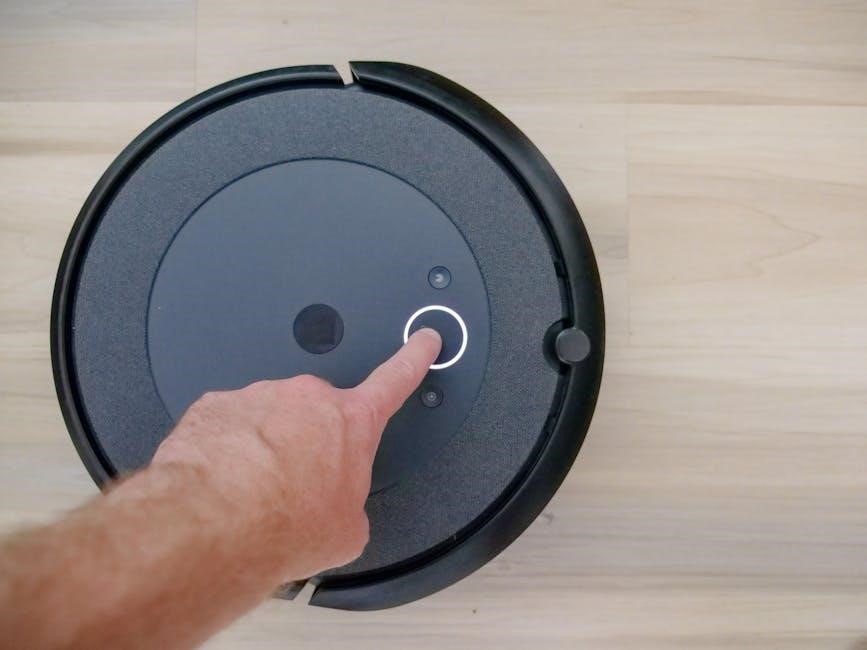
Robotic vacuums provide automated cleaning convenience, navigating spaces independently, but they rely on electricity and often struggle with larger debris. Manual push vacuums, conversely, offer a cost-effective and eco-friendly alternative, requiring physical effort but eliminating energy use. While robots excel at consistent, hands-free maintenance, manual models provide targeted cleaning and are ideal for quick spot treatments and areas robots can’t reach.
Manual vs. Central Vacuum Systems
Central vacuum systems offer powerful, whole-house cleaning via wall inlets, but require professional installation and are costly. Manual push vacuums present a portable, affordable solution needing no installation or electricity. While central systems excel at deep cleaning and allergen removal, manual models are perfect for quick cleanups and spaces without central vacuum access, offering a simpler, more accessible cleaning method.
Maintenance and Care
Regularly clean the dustbin and maintain the brush roll for optimal performance. Store the vacuum in a dry, secure location to ensure longevity.
Cleaning the Dustbin
Consistent dustbin cleaning is crucial for maintaining suction and overall performance. After each use, or when visibly full, carefully remove the dustbin from the manual push vacuum. Empty the collected debris into a trash receptacle, ensuring no blockages remain. Periodically, wash the dustbin with mild soap and water, allowing it to dry completely before reattaching it to the vacuum. This prevents dust buildup and ensures hygienic operation.
Brush Roll Maintenance
Regular brush roll maintenance maximizes cleaning effectiveness. Periodically inspect the brush roll for tangled hair, strings, or debris. Carefully remove these obstructions using scissors or a seam ripper, avoiding damage to the bristles. For deeper cleaning, remove the brush roll (if possible) and gently wash it with mild soapy water, ensuring it’s fully dry before reinstalling.
Storage Recommendations
To prolong the life of your manual push vacuum, store it in a dry, secure location, protecting it from moisture and accidental tipping. A garage, shed, or closet works well; Ensure the dustbin is empty before storage to prevent odors. Regularly check for any loose parts and tighten them as needed for optimal future performance.
Top Manual Push Vacuum Models (as of 02/03/2026)
Leading models include the NC 4 32, ideal for versatile cleaning, and the NC 9 36, boasting a battery, traction, and vacuum functionality.
NC 4 32 Manual Walk-Behind Sweeper
The NC 4 32 Manual Walk-Behind Sweeper is a versatile cleaning tool suited for both indoor and outdoor spaces. Featuring dual side brooms and a 10 US Gal capacity dustbin, it offers a 32-inch total sweeping width. This model effortlessly handles diverse debris – from metal shavings and nails to leaves and cans – and excels at cleaning corners and edges. Its adjustable sweeping height adapts to varied ground conditions, and it’s conveniently maneuverable on stairs.
NC 9 36 Battery Sweeper with Traction Drive and Vacuum System
The NC 9 36 Battery Sweeper combines manual push power with a vacuum system and traction drive for enhanced cleaning. Boasting dual side brooms and a 16 US Gal capacity, it provides a 36-inch total sweeping width. Suitable for indoor and outdoor use, it easily tackles metal shavings, leaves, and more, even in tight corners. Stair maneuverability and adjustable height add to its versatility;
Cost and Availability
Manual push vacuums offer budget-friendly cleaning, with prices varying based on features and capacity. They are readily available both online and in many retail stores.
Price Range of Manual Push Vacuums
As of February 3rd, 2026, manual push vacuum prices generally range from $100 to $300, though this can fluctuate. Simpler, standard sweepers typically fall on the lower end of the spectrum, around $100-$150. More advanced models, like the NC 9 36 with its battery and vacuum system, command prices between $200 and $300. Factors influencing cost include dustbin capacity, sweeping width, and added features like traction drive.
Where to Buy (Online and In-Store)
Manual push vacuums are readily available through various channels. Major online retailers like Amazon and Walmart consistently stock several models. Home improvement stores such as Home Depot and Lowe’s often carry them in-store, allowing for immediate purchase. Specialty cleaning supply stores may also offer a curated selection. Checking the manufacturer’s website, like for NC sweepers, is also recommended.
Environmental Impact
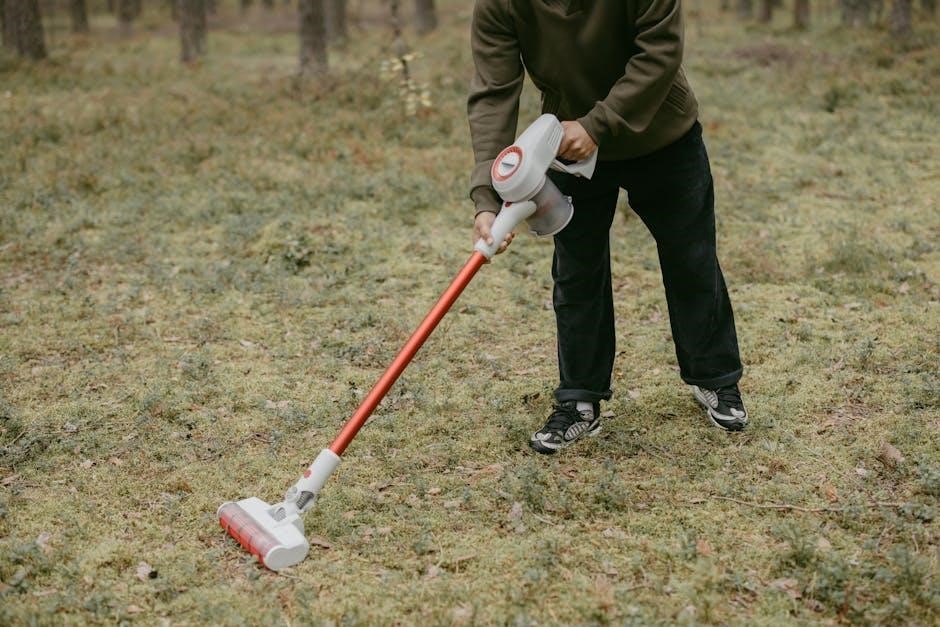
Manual push vacuums are inherently eco-friendly, reducing energy consumption and noise pollution, offering a sustainable cleaning option compared to electric alternatives.
Eco-Friendly Aspects of Manual Operation
The core benefit of a manual push vacuum lies in its operation – entirely human-powered. This eliminates the need for electricity, drastically reducing your carbon footprint and reliance on power grids. By choosing manual cleaning, you actively contribute to lower energy demands and a healthier planet. These vacuums also avoid the manufacturing and disposal impacts associated with electric models, promoting a truly sustainable cleaning practice.
Reduced Energy Consumption
Unlike electric vacuums demanding significant power, manual push vacuums consume zero electricity during operation. This translates to substantial energy savings, lowering your utility bills and minimizing environmental impact. By foregoing electrical power, you directly reduce demand on power plants, contributing to decreased greenhouse gas emissions and a more sustainable lifestyle. It’s a simple yet impactful choice.
User Considerations and Choosing the Right Model
Assess space, cleaning frequency, and physical ability when selecting a manual push vacuum; consider models suited to your needs and limitations for optimal results.
Space and Storage Limitations
Manual push vacuums excel in areas where bulky electric models struggle, making them perfect for apartments or homes with limited storage. Their compact design allows for easy stowing in closets, utility rooms, or even against walls. Consider the vacuum’s dimensions and whether it can be easily maneuvered within your cleaning space. Prioritize models offering convenient storage solutions if space is a primary concern, ensuring effortless access when needed.
Cleaning Frequency and Needs
For light, daily debris or quick cleanups, a manual push vacuum is an efficient choice. If you require deep cleaning or have extensive carpeting, an electric vacuum might be more suitable. Assess how often you clean and the types of messes you encounter. Manual models shine for small spaces and maintaining cleanliness between heavier cleaning sessions, offering convenient, on-demand tidying.
Physical Effort Required
Manual push vacuums necessitate physical exertion, as operation relies entirely on the user’s pushing force. While generally easy to maneuver, larger areas or prolonged use can be tiring. Models with traction drive, like the NC 9 36, reduce effort. Consider your physical capabilities and the size of the cleaning area when choosing a manual option.
Future Trends in Manual Push Vacuum Technology
Innovations focus on improved brush roll designs, lightweight materials, and enhanced dustbin functionality, aiming for effortless cleaning and increased performance in manual vacuums.
Improvements in Brush Roll Technology
Future manual push vacuums will likely feature advanced brush roll designs, enhancing their ability to capture a wider range of debris on diverse floor surfaces. Expect to see bristles crafted from innovative, durable materials, optimizing both sweeping and vacuuming capabilities. Adjustable brush height settings will become more prevalent, adapting to varying carpet piles and hard floors for superior cleaning performance. These advancements aim to minimize user effort while maximizing debris pickup efficiency, addressing limitations of current models.
Integration of Lightweight Materials
A key trend in manual push vacuum technology involves incorporating lightweight yet robust materials like advanced polymers and aluminum alloys into the vacuum’s construction. This shift reduces overall weight, making the vacuums easier to maneuver, especially for extended cleaning sessions or users with limited physical strength. Lighter designs also improve portability, facilitating storage and transport around the home or workspace, enhancing overall usability.
Enhanced Dustbin Designs
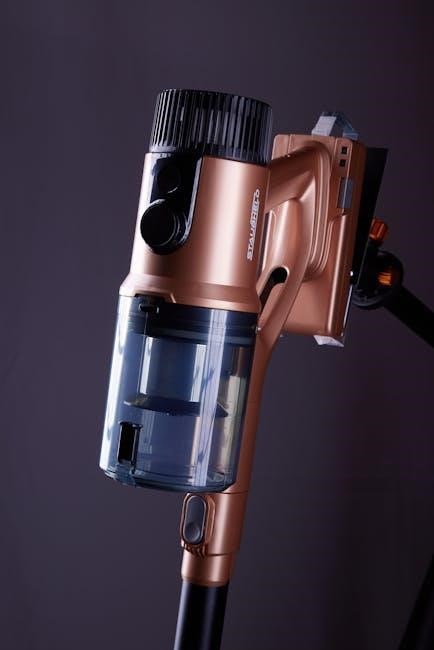
Future manual push vacuums will likely feature improved dustbin designs focusing on capacity and ease of emptying. Innovations may include larger volume dustbins – like the 16 US Gal capacity seen in the NC 9 36 model – and streamlined release mechanisms. Designs minimizing dust clouds during emptying are also anticipated, alongside improved filtration to contain fine particles and enhance overall hygiene.
Troubleshooting Common Issues
Common problems include debris not being picked up, difficulty pushing, or a quickly overfilling dustbin; regular maintenance and checking for blockages are key solutions.
Vacuum Not Picking Up Debris
If your manual push vacuum isn’t collecting dirt, first inspect the brush roll for tangled hair or debris, hindering its rotation; A clogged dustbin significantly reduces suction; ensure it’s emptied regularly. Check for obstructions in the vacuum’s airway. Verify the sweeping height is appropriately adjusted for the floor type, ensuring optimal contact and debris capture. Finally, confirm the side brooms are functioning correctly to channel debris towards the main brush.
Difficulty Pushing the Vacuum
Experiencing resistance while pushing? Begin by checking the brush roll – excessive friction from carpet pile or tangled debris can increase effort. Ensure the sweeping height is correctly adjusted; a too-low setting creates drag. Verify the dustbin isn’t overly full, adding unnecessary weight. Inspect the wheels for obstructions like hair or string, impeding smooth movement. Finally, confirm the floor surface isn’t excessively wet or sticky.
Dustbin Overfilling Quickly
A rapidly filling dustbin suggests a large debris volume or potentially a compromised filtration system. Consider increasing cleaning frequency for heavily soiled areas. Examine the brush roll for excessive buildup, hindering effective sweeping. Verify you’re not attempting to collect wet materials, as they compact within the bin. Regularly empty the dustbin to maintain optimal suction and performance.
Safety Precautions
Always avoid obstacles while operating a manual push vacuum. Exercise caution on stairs, ensuring a secure grip and controlled descent to prevent accidents.
Avoiding Obstacles and Hazards
When utilizing a manual push vacuum, proactively scan your cleaning path for potential obstacles like furniture legs, loose rugs, and electrical cords. These items can impede movement and potentially cause damage to both the vacuum and your surroundings. Be particularly mindful of small objects, such as nails or metal shavings, which the vacuum is designed to collect, but could present a hazard if scattered. Prioritize a clear workspace for efficient and safe operation.
Proper Usage on Stairs
Many manual push vacuums, like the NC 4 32, are designed for stair use, offering enhanced maneuverability. However, exercise extreme caution. Maintain a firm grip on the handle and ensure stable footing on each step. Slowly and deliberately push the vacuum, avoiding sudden movements. Prioritize safety by never leaning excessively or overreaching while cleaning stairs, and always face the staircase.
Manual push vacuums offer a compelling blend of simplicity, sustainability, and effectiveness for various cleaning tasks. From the NC 4 32 to the NC 9 36, these models provide a viable alternative to electric options, particularly for smaller spaces and quick cleanups. They represent a step towards eco-conscious cleaning, reducing energy consumption and noise pollution.
Related Posts

2013 nissan rogue manual
The 2013 Nissan Rogue manual provides essential guidance for owners,…

power quick pot manual pdf
Power Quick Pot Manual PDF: A Comprehensive Guide Discover effortless…
mitsubishi electric mr slim manual
The Mitsubishi Electric MR Slim series is renowned for its…